
The Cost of Optimization: What It Does to Innovation
Highly optimized organizations strip away the informal time and connective tissue that lets teams survive creative abrasion. Innovation is a human system under pressure, not a process you install.

Highly optimized organizations strip away the informal time and connective tissue that lets teams survive creative abrasion. Innovation is a human system under pressure, not a process you install.

The digitization wave reshaped knowledge work over thirty years. AI is running the same sequence in five. Why accurate diagnosis, technical versus adaptive, is now the central leadership task.

Access to powerful people is not development. Real growth comes from examining your own hard calls and making meaning from experience, not logging time in the room with power.

Generative AI does not invent our worst habits, it mirrors them: the save-face reflex, the rush to certainty, the fluency we mistake for truth. What the reflection teaches us about how we lead.
Most boards are stuck in 1987 — approving budgets they don't understand and rubber-stamping decisions already made. This essay diagnoses the three patterns that destroy good governance and maps what it takes to move boards from approval bodies to genuine thinking partners.
Charisma and IQ don't explain what separates good leaders. This essay identifies the nine specific, buildable capacities — from self-awareness under pressure to regulating group dynamics — that allow leaders to operate effectively in high-stakes contexts.

Most meetings fail because they weren't designed for the kind of interaction the work required. This essay introduces the four authority functions — direction, order, protection, and meaning — and practical frameworks for turning meetings from administrative overhead into the fastest lever for improving team thinking and execution.
A more human, more effective way to have hard conversations

A multi-voice commentary debating AI's impact on intellectual rigor, content quality, and political deployment-a cross-industry view on attention, authenticity, and leadership.

Drawing on her time as Speaker of the Vermont House, Mitzi Johnson shares how to navigate intense scrutiny, build trust through consistency, and act with clarity in high-stakes first decisions.

An article exploring the insights gained from developing a dynamic AI-powered leadership simulator grounded in adaptive challenges and KS Insight's intellectual property.
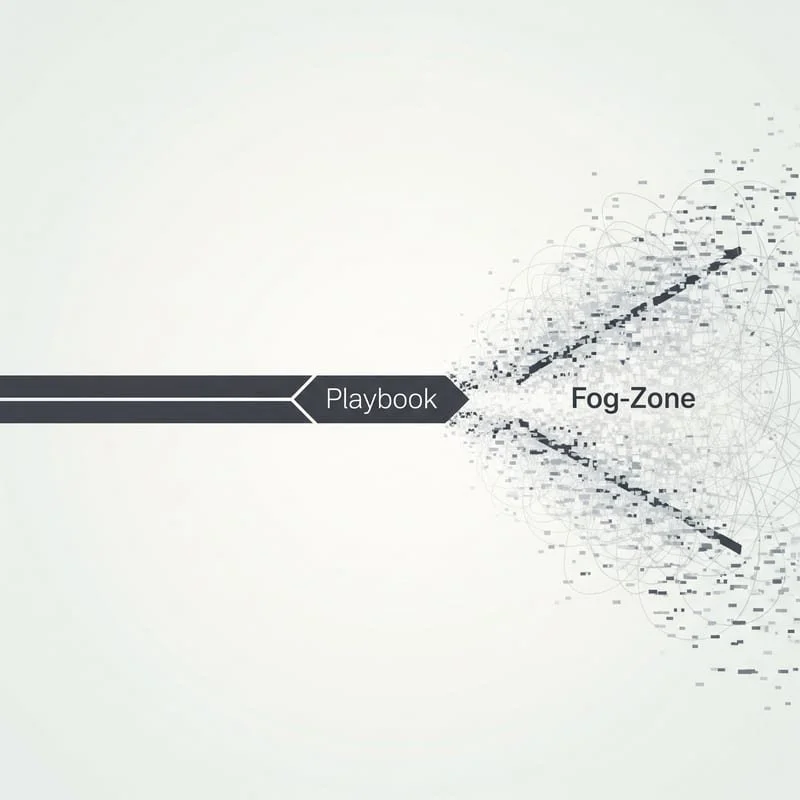
What distinguishes rehearsed emergencies from fog-zone crises and what leaders can realistically prepare for when both urgency and uncertainty are high.
Why exclusion and silence damage trust more than hard truths-and how leaders can sustain morale in constrained environments.

This essay explores how leaders can keep organizations moving, informed, and connected when forecasts, funding, and institutional structures are unstable and clear guarantees are not possible.